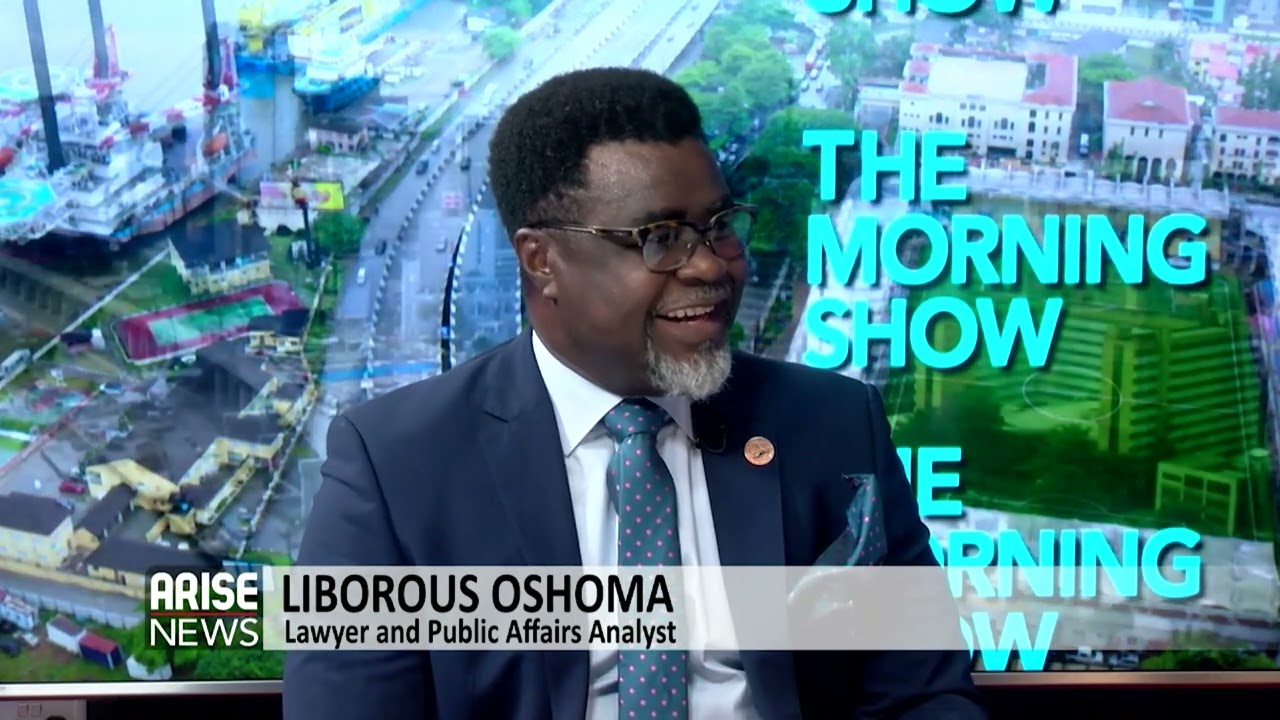

Legal practitioner Liborous Oshoma has criticized the handling of alleged financial discrepancies involving the Nigerian National Petroleum Company Limited, describing the national oil company as an institution increasingly treated as the Federal Government’s “ATM.”
Oshoma spoke during an interview on the Arise News Morning Show on Saturday, questioning the financial relationship between the Federal Government and NNPC Ltd.
According to him, the company appears to be used as a source of funding for government obligations without sufficient transparency or accountability to Nigerians.
“It is so sad that people now describe NNPC as the Federal Government’s ATM. It is more like an ATM where the government goes to withdraw without making deposits,” he said.
The lawyer referred to the $3 billion crude oil repayment loan secured during the tenure of former NNPC Group Chief Executive Officer Mele Kyari. He questioned whether it was appropriate for the oil company to borrow money on behalf of the Federal Government.
He also raised concerns about crude oil forward sale agreements, under which funds are received in advance and repaid with future crude oil supplies.
Oshoma’s comments followed reports of unresolved financial entries amounting to about ₦210 trillion in NNPC’s audited accounts. He stressed that the disputed amount had not been declared missing but remained unreconciled and required a detailed explanation.
During the program, Oshoma criticized the auditors’ responses during a Senate committee investigation into the discrepancies.
He said an auditor appearing before a parliamentary inquiry should be prepared to explain the figures and provide all relevant documents rather than requesting permission from the client that commissioned the audit.
“When you are before a Senate committee carrying out an investigation under Sections 88 and 89 of the Constitution, you are appearing before a body exercising powers similar to a judicial inquiry,” he said.
According to him, Nigerians have a right to know how the reported receivables and liabilities were calculated and how the total of about ₦210 trillion was reached.
Oshoma argued that the National Assembly possesses constitutional powers to compel the production of documents, summon witnesses, and issue warrants where individuals refuse to cooperate with a lawful investigation.
He accused lawmakers of failing to exercise those powers effectively, saying their approach had made the legislature appear helpless in its oversight responsibilities.
“The National Assembly should not merely continue to insist that documents must be produced. It has powers under the Constitution to compel compliance,” he said.
The lawyer warned that the refusal or failure to submit documents could create public suspicion that information was being concealed.
He, however, acknowledged the Senate committee’s clarification that it had not accused NNPC officials of stealing or diverting the money. The committee had reportedly stated that the figures were merely irreconcilable and required supporting documentation.
Oshoma said the absence of a clear explanation could nevertheless lead members of the public to conclude that the funds had been mismanaged.
“When an amount is unexplained, the average person may assume that the money has gone somewhere and that those responsible do not want to explain it,” he said.
He also questioned why senior officials who headed NNPC during the period under review had not been publicly called upon to provide explanations.
According to him, responsibility for major transactions does not rest with a single department, as decisions are usually taken collectively at the management level before receiving final approval from the company’s chief executive.
“The responsibility ultimately rests at the desk of the group chief executive because management decisions and recommendations pass through that office,” Oshoma said.
He warned that unresolved allegations involving trillions of naira could cause serious reputational damage to present and former officials of the organisation, even when no wrongdoing had been established.
Oshoma further described the process as a “ping-pong” situation in which NNPC appointed an auditor to reconcile the accounts, only for the auditor to seek further authorisation from the company before providing information to the Senate.
He urged the National Assembly to exercise its constitutional authority and ensure that the disputed financial records were fully reconciled and made available to the public.
According to him, failure to conclude the investigation and hold the appropriate officials accountable would deepen public distrust in NNPC and the institutions responsible for supervising it.