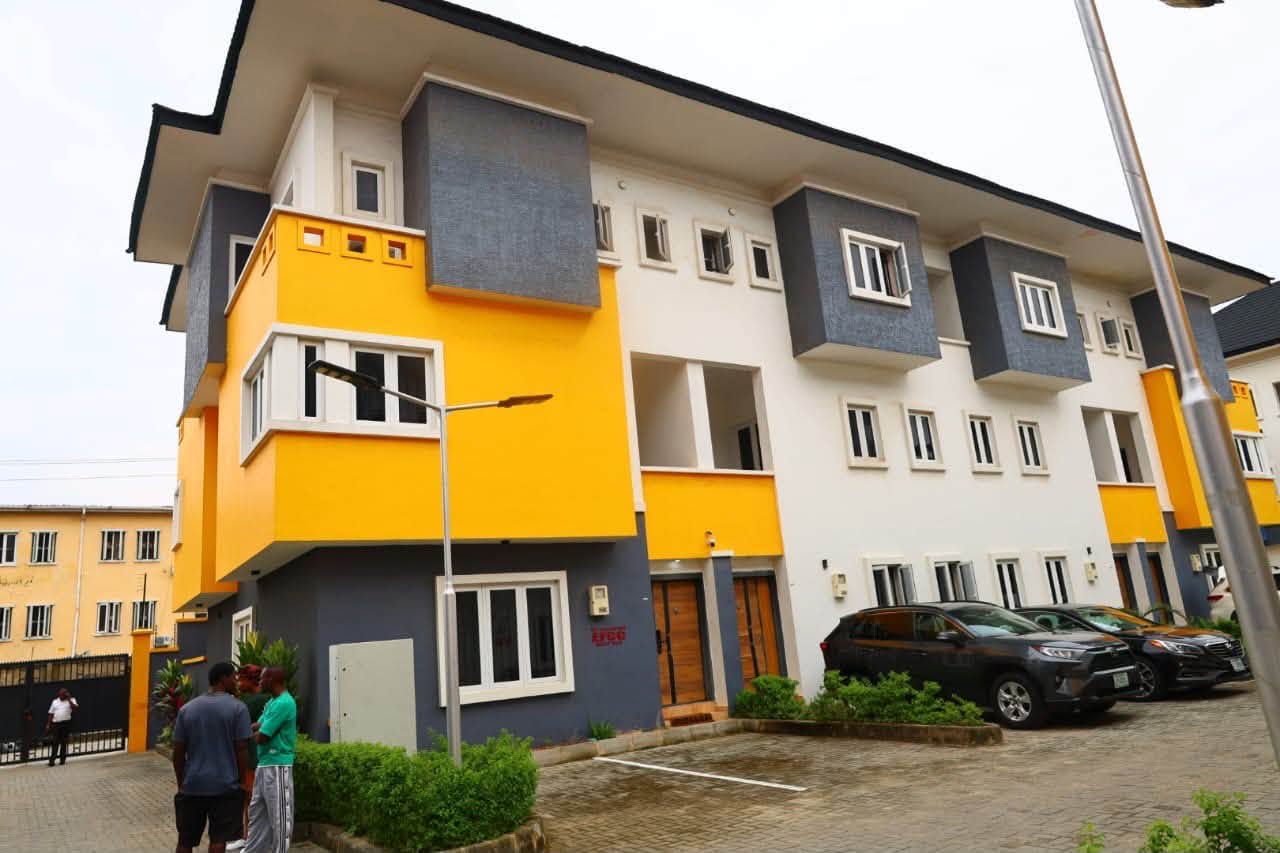

The Federal High Court sitting in Ikoyi, Lagos, has ordered the final forfeiture of 52 terrace and maisonette units located in the Lekki area of the state.
Justice Alexandra Owoeye issued the order on Wednesday, July 15, 2026, after granting an application filed by the Economic and Financial Crimes Commission.
The affected properties are situated at Mercyville Estate, Covenant Way, off New Road, Ilasan, Lagos. They were recovered from Fielddreams Limited, Ifeanyi Nweke, and Amex Savings and Loans Limited.
According to a statement published on the EFCC’s official Facebook page, the commission’s Lagos Zonal Directorate 2 filed and argued the motion through its counsel, Franklin Ofoma.
The EFCC had earlier secured an interim forfeiture order for the properties on August 14, 2024. The order was granted by Justice Akintayo Aluko following an ex parte application filed by the commission.

Justice Aluko also directed the EFCC to publish the interim order in a national newspaper, allowing individuals or organisations claiming an interest in the properties to explain why they should not be permanently forfeited.
Following the publication, the respondents filed an affidavit opposing the final forfeiture application.
In their initial submission, the respondents claimed that the funds used to develop the 52 housing units were derived from the sale of part of a property acquired with proceeds from 29 terrace and maisonette units valued at ₦1.9 billion.
The EFCC, however, said the respondents later changed their position by alleging that some applicants had failed to complete the housing units.
The commission argued that the latter claim contradicted the respondents’ earlier affidavit, in which they stated that proceeds from the sale had been used to complete the furnishing and interior decoration of the remaining units and that construction was concluded in 2020.

During Wednesday’s proceedings, Ofoma informed the court that the EFCC had complied with the directive to publish the interim forfeiture order.
He said the application for final forfeiture was supported by a 31-paragraph affidavit sworn to by Afolabi Seyi Oladele, a litigation officer in the EFCC’s Legal Department.
The commission maintained that the properties were reasonably suspected to be proceeds of unlawful activities and urged the court to grant the final forfeiture order.
Ofoma also alleged that Nweke had failed to appear before two Lagos State High Court judges for arraignment in separate criminal cases.
He told the court that two arrest warrants remained in force against Nweke and alleged that he had violated the conditions of the administrative bail earlier granted to him by the EFCC.
After considering the parties’ submissions, Justice Owoeye rejected the respondents’ affidavit, ruling that the court could not select which parts of their conflicting evidence to accept.
The judge consequently held that there was no valid opposition to the EFCC’s motion for final forfeiture.
Justice Owoeye further ruled that the commission had established reasonable grounds to suspect that the properties were proceeds of unlawful activities.
“Having resolved the sole issue in this application in favour of the applicants, I hold that this application has merit and ought to be granted,” the judge ruled.
The court subsequently granted the EFCC’s application and ordered the final forfeiture of the 52 terrace and maisonette units.