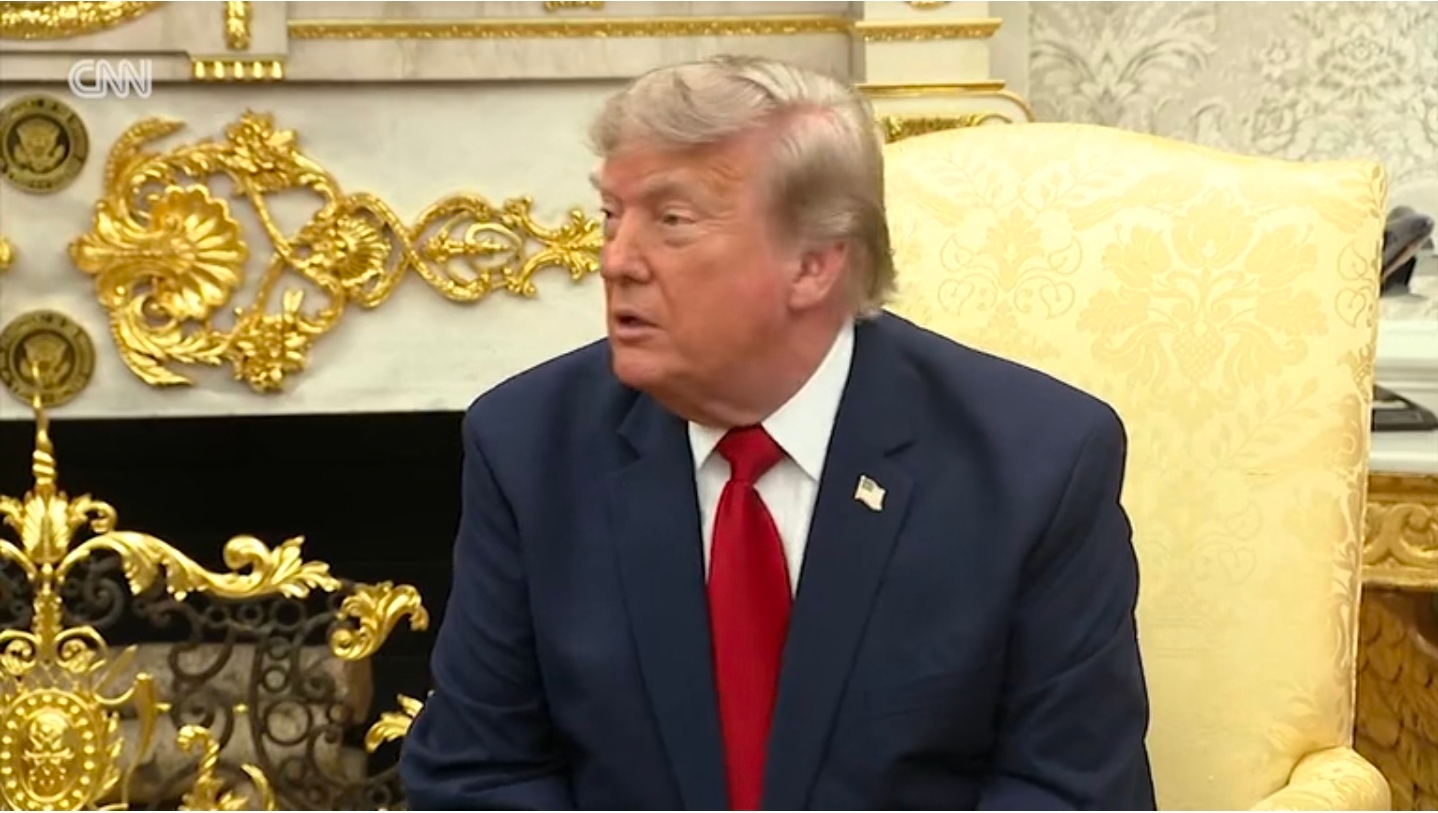

A newly signed civilian nuclear cooperation agreement between the United States and Saudi Arabia has been thrown into uncertainty after President Donald Trump linked its approval to Riyadh establishing diplomatic relations with Israel.
US Energy Secretary Chris Wright and Saudi Energy Minister Prince Abdulaziz bin Salman signed the agreement in Washington on Wednesday, July 22. The deal is intended to create a legal framework for a long-term, multibillion-dollar partnership involving American nuclear technology and Saudi Arabia’s civilian energy programme.
However, less than 24 hours after the signing ceremony, Trump announced that the agreement would depend on Saudi Arabia joining the Abraham Accords, the US-backed initiative through which several Arab countries normalised relations with Israel.
White House Press Secretary Karoline Leavitt later confirmed that the agreement would not proceed unless Saudi Arabia accepted the condition, describing Trump as the administration’s “final dealmaker.”
Trump also said the United States would support only non-enriched civilian nuclear facilities in Saudi Arabia. His statement created further uncertainty because earlier reports indicated that the agreement could allow uranium enrichment in the kingdom after certain conditions and studies were completed.
CNN reported that the additional condition caught some members of the administration’s nuclear negotiating team by surprise. According to officials briefed on the matter, the requirement to join the Abraham Accords had not been included in the agreement announced by the Energy Department.
The report also described tensions between White House and Energy Department officials over the timing of the announcement. Some Trump aides reportedly believed the agreement should not have been publicly presented as final because the required documents had not yet been transmitted to Congress.
The Energy Department rejected suggestions that it had acted without proper authorisation, maintaining that it coordinated the negotiations and announcement with the White House and State Department.
The White House also insisted that Trump’s energy team remained united and that nuclear cooperation with Saudi Arabia had always been connected to the administration’s broader objective of expanding the Abraham Accords.
The agreement has attracted criticism from nuclear non-proliferation specialists over its reported uranium-enrichment provisions and Saudi Arabia’s failure to adopt the International Atomic Energy Agency’s Additional Protocol, which gives inspectors broader access to undeclared or suspected nuclear locations.
Supporters of the agreement argue that cooperation would give Washington greater influence over Saudi Arabia’s nuclear safety and non-proliferation standards while creating commercial opportunities for American companies. They also warn that Riyadh could turn to China or Russia for assistance if the United States refuses to participate.
Saudi Arabia has consistently maintained that normalising relations with Israel would require a credible pathway towards the establishment of a Palestinian state. That position could make Trump’s new condition a major obstacle to the nuclear agreement.
The agreement is expected to undergo congressional review before it can take effect. Its future now depends on whether Washington and Riyadh can resolve the disagreement over Israeli normalisation and clarify the provisions governing uranium enrichment and international inspections.