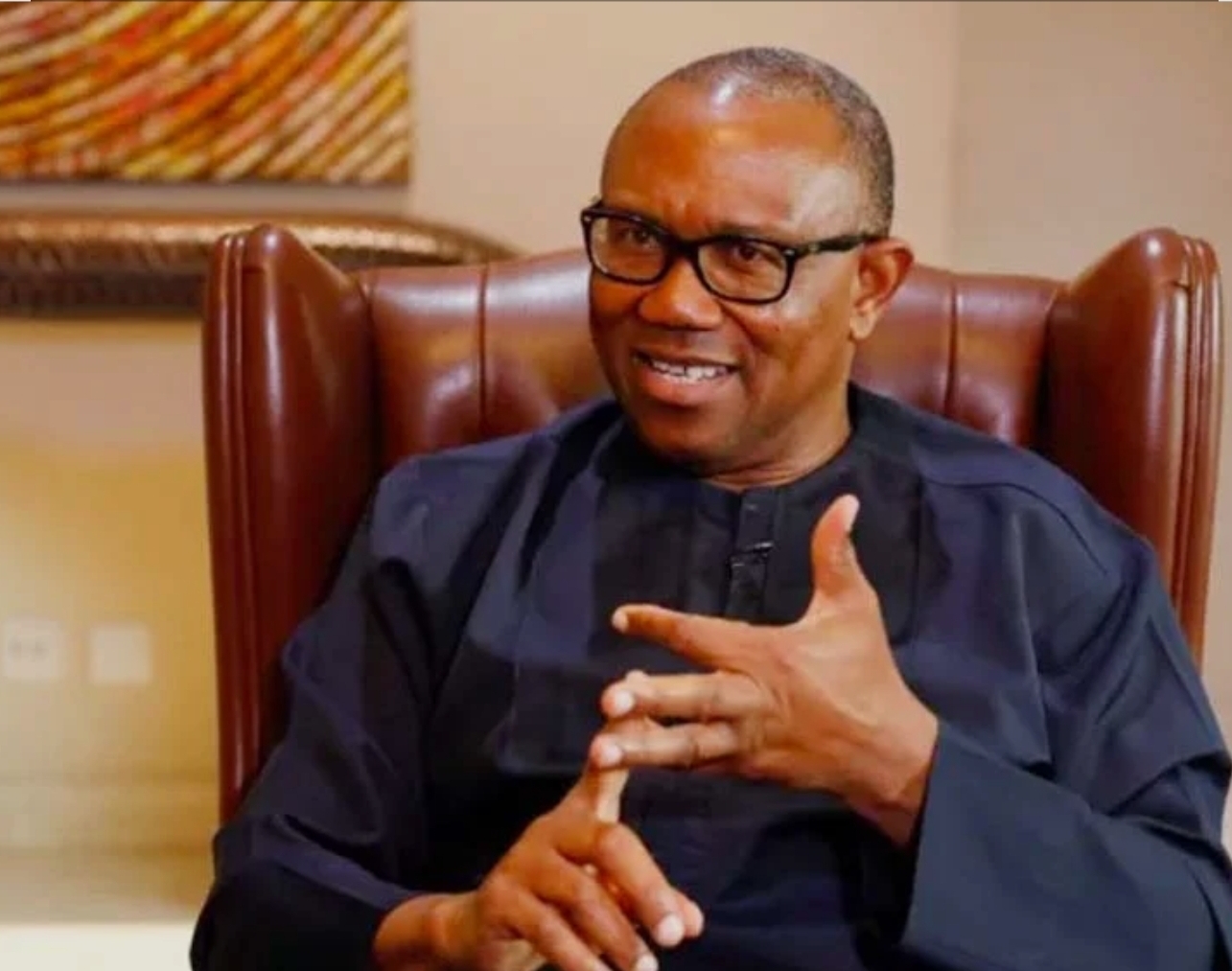

The presidential candidate of the Nigeria Democratic Congress, Peter Obi, has reaffirmed his commitment to serving only one four-year term if elected president in 2027, while outlining plans to tackle insecurity, poverty and Nigeria’s declining productive capacity.
Obi made the remarks during an exclusive interview with Seun Okinbaloye on Channels Television’s Sunday Politics on Sunday.
The former Anambra State governor said his single-term promise was based on an agreement reached with his running mate, Rabiu Kwankwaso, and should not be dismissed as a political strategy designed merely to secure power.
According to him, four years would be sufficient to establish a clear direction for Nigeria and demonstrate a different approach to governance.
“I will serve for four years—full stop,” Obi said, maintaining that his commitment was “four years and not a day more.”
Obi also launched a strong criticism of President Bola Tinubu’s administration, alleging that the President lacked the capacity and energy required to address Nigeria’s worsening economic, social and security problems.
While acknowledging Tinubu’s performance as a former governor of Lagos State, Obi argued that the leadership currently being provided at the federal level was inadequate for the scale of Nigeria’s challenges.
He said the country was moving in the wrong direction, citing increasing poverty, hunger, insecurity, unemployment and the number of children outside the school system. Obi consequently called on Tinubu to step aside after completing his current tenure rather than seek another term in 2027.
The NDC candidate also criticised what he described as the President’s limited direct communication with citizens.
Obi said Nigerians elected Tinubu and should therefore hear directly from him on important national policies and controversies rather than depend almost entirely on presidential aides and spokesmen.
He urged the President to “come out of that bunker” and speak openly to Nigerians about the state of the country and the government’s plans for addressing their concerns.
On insecurity, Obi maintained that military and policing measures alone would not resolve the crisis. He argued that widespread poverty, unemployment and poor access to education had contributed to the growth of crime and violence.
He promised to provide hands-on leadership and personally take responsibility for national security if elected. Obi added that the federal government must secure farming communities, invest substantially in education and create legitimate economic opportunities for young Nigerians.
Turning to the economy, the former governor said agriculture would occupy a central place in his administration’s plan to move Nigeria from consumption to production.
He argued that Nigeria’s extensive arable land could generate food, industrial raw materials, employment and export revenue if insecurity was reduced and farmers received appropriate government support.
Obi said a productive economy would also require affordable financing for businesses, stronger manufacturing industries and consistent policies that encourage investment.
According to him, increased agricultural production could reduce food imports, address hunger and eventually generate more revenue than Nigeria currently earns from crude oil.
Obi also rejected allegations that his presidency would deepen ethnic or regional divisions.
Responding to comments questioning his ability to unite the country, he said his record of visiting and supporting communities across northern, southern and central Nigeria demonstrated his commitment to national unity.
He cited visits to internally displaced persons’ camps, conflict-affected communities, schools and hospitals, as well as assistance provided for projects in states including Borno, Kaduna, Gombe, Bauchi, Sokoto and Benue.
Obi said his presidency would begin a process of national healing in which citizens would be treated fairly, irrespective of ethnicity or religion.
Addressing claims that he was desperate to become president, Obi said his overriding ambition was to see Nigeria work.
“I’m desperate to see Nigeria work,” he said, adding that he wanted a country where young people could obtain education, secure employment, establish businesses and succeed without depending on political or personal connections.
He concluded by calling on politicians and other public figures to concentrate on the problems affecting ordinary Nigerians rather than personal attacks and discussions centred on his political ambition.
Obi said the 2027 election should be determined by credible proposals for reducing poverty and hunger, securing the country, improving healthcare and returning millions of children to school.
Leave a Reply